

What you can do to help the whales of the St. Larewnce
 
Good on you for getting started, as the first thing you need to do is educate yourself! In fact, you can familiarize yourself with whales and the habitat in which they live. You can also participate in collecting scientific data (i.e. citizen science) and minimize your impact on cetaceans by observing them from shore or aboard ferries rather than from a boat. All of these little things add up to make a difference.
 
Several partners – including the Marine Mammal Observation Network (MMON), Fisheries and Oceans Canada, Parks Canada and the Group for Research and Education on Marine Mammals (GREMM) – have teamed up to educate the public on how to protect belugas. One of their initiatives is for you, namely the project “Sentinels of the St. Lawrence: Keeping an eye on whales at risk.” We urge you to contribute to a better understanding of whales by sharing your sightings through a free online tool: Vigie marine. 
 
The partners also co-authored an article for Whales Online entitled Five Actions to Help the St. Lawrence Beluga. Here is a summary of the five actions you can take to support whale conservation in the St. Lawrence:
1. EDUCATE YOURSELF: Learn to identify the species of the St. Lawrence and minimize the impact of your presence by completing the boater training.
This free training can be accessed via your cell phone, tablet or computer and takes 30 to 45 minutes to complete. You will then receive a certificate attesting that you have successfully completed the training.
 
2. PARTICIPATE IN CITIZEN SCIENCE: Record your observations on Vigie marine to contribute to a better understanding of the distribution of marine species in the St. Lawrence.
From the beluga whale to the grey seal, not to mention the basking shark and the leatherback sea turtle, just about any sighting of a marine animal can be reported here! Accessible year-round, this tool can be used to document and report what you saw. This information is entered into databases that are developed and used by scientists to support their research.
3. OBSERVE FROM LAND OR ABOARD FERRIES: Take advantage of the many shore-based observation sites and aboard ferries to enjoy whales without disturbing them.

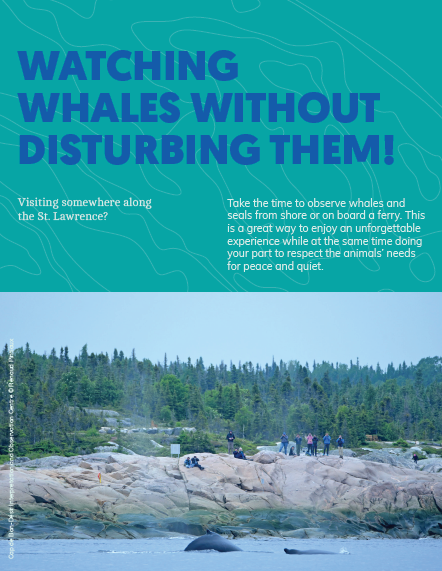
Visiting somewhere along the St. Lawrence? Take the time to observe whales and seals from shore or on board a ferry. This is a great way to enjoy an unforgettable experience while at the same time doing your part to respect the animals’ needs for peace and quiet.

Marine protected areas often lie adjacent to national parks that feature trails and prime shore-based viewing locations. Further, many municipalities have developed public areas along the water’s edge from which visitors can observe whales and seals. Download the Map of Shore-Based Observation Sites.

The Window on Belugas activity offers a unique immersive experience based on the work of beluga research teams, namely images taken by drone and sound recordings made by hydrophone. A fascinating scientific adventure awaits you at the observation sites in the heart of the Saguenay–St. Lawrence Marine Park

4. STAY INFORMED AND REPORT INCIDENT: Stay informed of what’s happening in the fascinating world of marine mammals and report any whale in distress to the Quebec Marine Mammal Emergency Response Network.
Follow the latest cetacean-related news on the Whales Online website. If you happen to observe an entangled whale, a marine mammal carcass washed ashore, or an animal outside its usual range, contact the Quebec Marine Mammal Emergency Response Network immediately at 1-877-722-5346. Mobile teams and volunteers will then take the necessary actions depending on the situation.

5. MODIFY YOUR CONSUMER HABITS: The things we buy have a direct impact on the environment and on whales.

The majority of goods and foodstuffs are moved by freighters. Thus, by opting for locally produced goods, we can help stem the increase in shipping traffic while at the same time mitigating underwater noise pollution. Additionally, by using environmentally friendly and biodegradable products and limiting our consumption of plastic, we contribute to maintaining healthy habitats for whales. Every little bit counts!
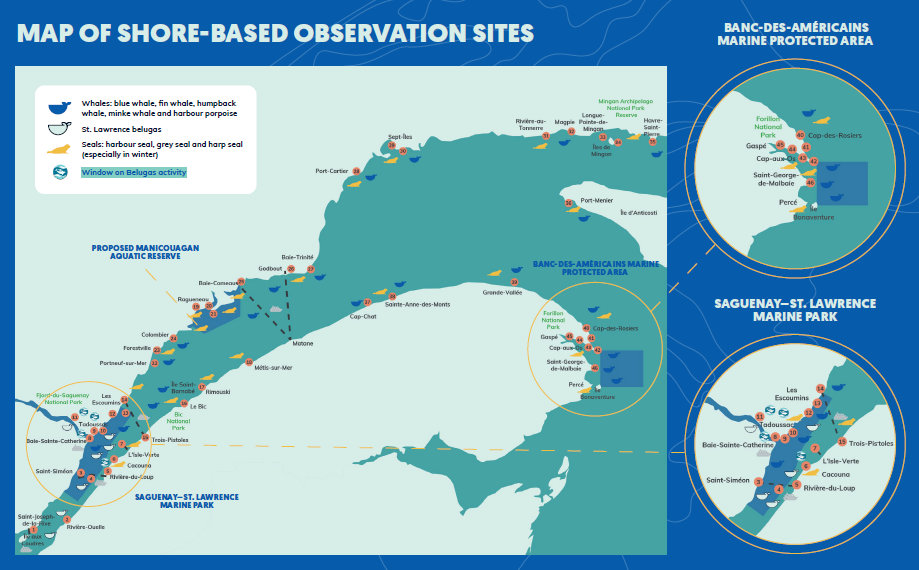
Observation sites from land in the St. Lawrence Estuary and Golf